
The climate is changing in my garden
I love gardening. When I’m in my garden it’s my chance to get away from the outside world and all it has to throw at us. Even the most menial tasks such as weeding lets me zone out, I guess it’s my therapy.
Being a keen environmentalist I’ve tried to garden using a specific set of principles. I don’t use artificial fertilisers, herbicides, insecticides, or weed killers. Have set aside spaces for insects to thrive and tried to create a garden that’s attractive to birds and other wildlife. The old bath (pictured), repurposed as a pond, is particularly popular with the birds and insects and provides a source of drinking water for our little feathered friends.
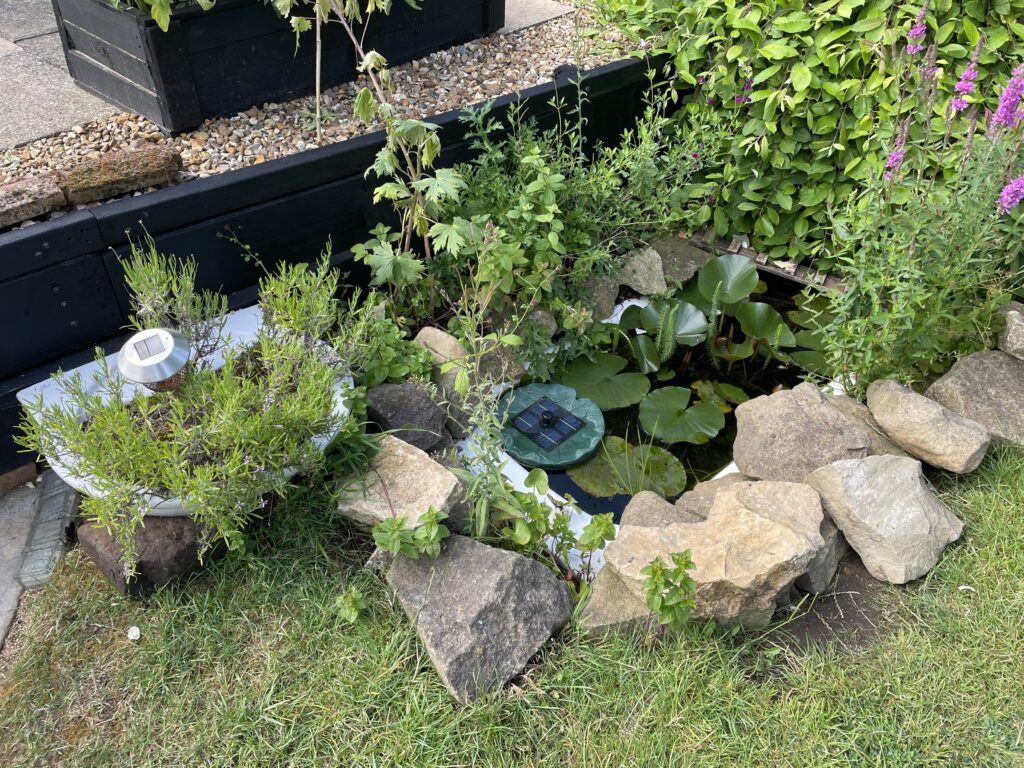
What I also love about gardening is I am constantly learning from past mistakes and failures and I’m gradually creating a garden I can enjoy all year round, by finding the right plants to thrive in the clay soil I have and improving the soil with organic materials. Also, using techniques such as companion planting, which can help to reduce pests and blight.
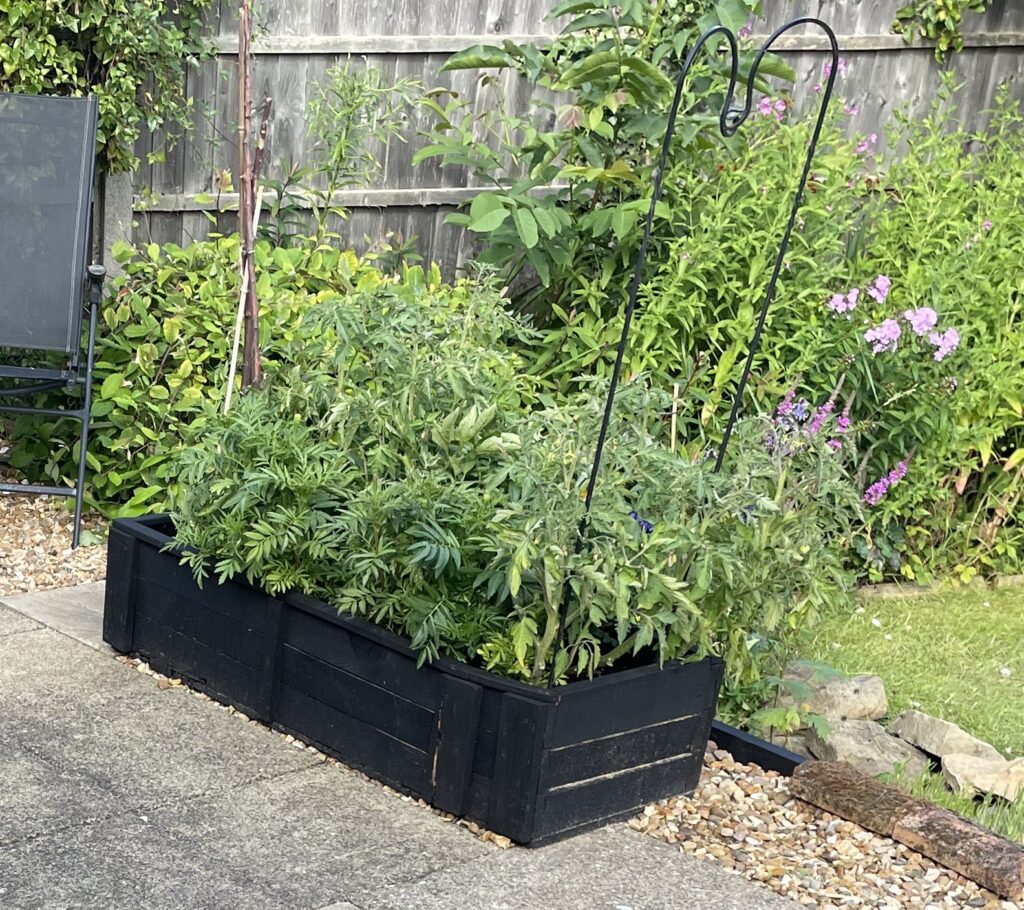
However, in recent years the challenge of maintaining my garden is presenting different challenges, as the traditional British seasons become less predictable. The overwhelming scientific consensus is the changes in our weather patterns are a result of human-induced climate change. This has resulted in increased and more severe periods of drought, heatwaves (this June being the hottest recorded since records began), heavy rainfall resulting in flooding and extreme cold snaps. And these conditions have taken their toll on my little corner of England.
I lost several established plants during the severe cold spell this winter, mostly more delicate species suited to warmer climates: an olive tree; orange tree; Aeonium Arboreums; and native plants such as agapanthus. I understand that all these plants should be able to withstand cold conditions, but when there is a sudden cold spell, such as we had last winter, with temperatures dropping as low as -14°C, a lot of plants struggle to deal with the sudden shock. The orange tree and aeoniums were in pots and kept in a sheltered spot, but even this did not give them sufficient protection.
Water is another major issue. I have 3 water butts and all were full to the brim by March/April time and then we had a spell of perhaps 4 to 6 weeks without any significant rain. It didn’t take that long for the water butts to run dry, even though I generally only use them for watering pot plants and seedlings. It came to a stage by early June, where I had to resort to filling one water butt from the mains water system, or risk losing more of my cherished plants.
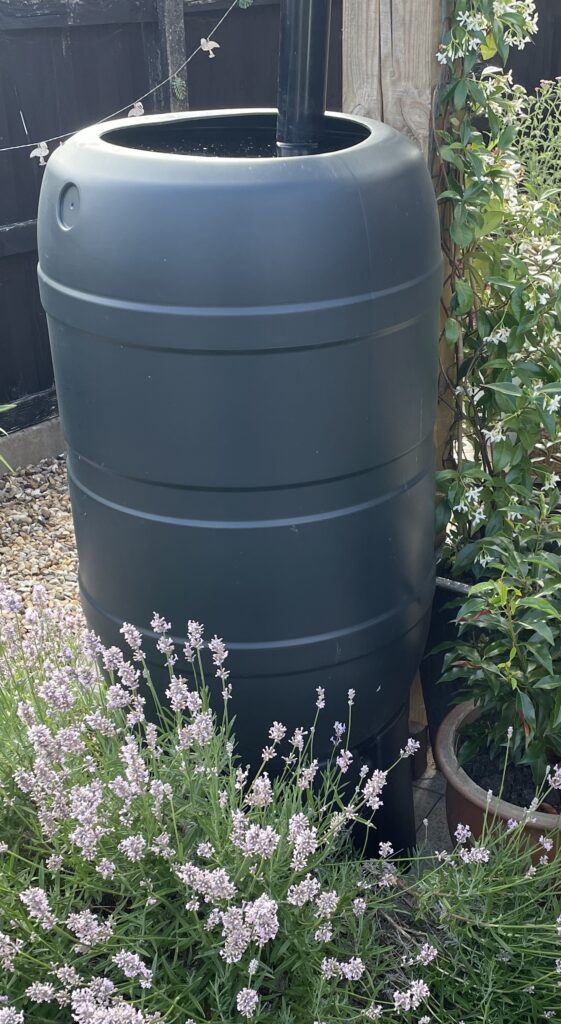
So, how have I overcome these problems. Firstly the water issue, I now take buckets into the shower and save washing-up water. Have put dishes under the majority of my pots to stop water running off and invested in an irrigation system that connects to one of the water butts and runs for 20 minutes, 4 times a day. Since implementing these methods I have not had to resort to using a hosepipe or using mains water, despite the hot June and currently everything appears to be thriving. As for protecting plants through potential cold spells I have made the decision to concentrate on perennial plants and wildflowers, that tend to lie dormant during the winter months and reappear when the weather warms up. Some of the plant species I’ve had success with this summer, include Campanula, Phlox, Euphorbia, Globe Thistles and Great Hairy Willow Herbs. Not all of these plants are originally native to these shores, but what they appear to have in common is they need minimal attention, can withstand both dry and wet conditions and flower for long periods, encouraging a variety of insect species into the garden.
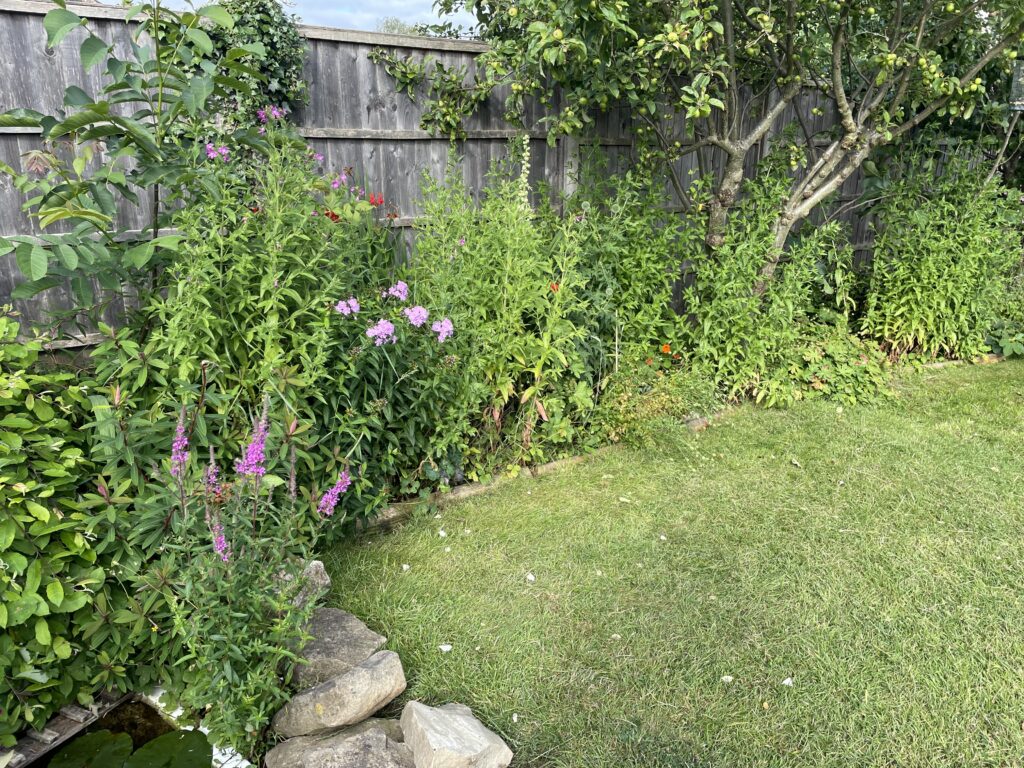
As mentioned above, gardening is a constant learning curve and whether all the species I have introduced continue to flourish remains to be seen. The climate is predicted to get more severe in the coming decades, which will no doubt present further problems to us British gardeners.
Hopefully though, through trial and error, continuing to improve the soil with organic materials, having more robust wildflower species and using and saving water more judiciously my garden can continue to flourish.
Thanks for reading and if you care to share any of your gardening tips and advice, my mind is a sponge, where gardening is concerned.
Chris
Chair of Kempston Climate Change Group